Home solar survey
Solar Site Survey Checklist for Homeowners
Know what we check before a rooftop solar quote, so your system is sized to your roof, EB usage and site conditions.
Home survey first
Before you ask for a quote, check the roof properly
A solar site survey checklist for homeowners keeps the first visit useful. It tells us what the roof can actually take, how the EB connection is set up and whether shade, wiring or drainage will change the final design. Without that, people end up comparing quotes that are not based on the same house.
The first call we get is usually simple. Will solar fit my roof, and what size should I think about? The honest answer comes from the bill, the terrace, the roof shape and the way the house sits in the sun. A home in Kottar is rarely built like one in Vadasery, so we never treat the site like a standard box.
Kanyakumari District gets strong sunshine through the year, but it also gets wind and, in many places, salty air from the coast. That means mounting hardware, cable sealing and panel placement need a close look before anyone drills a hole. In a place like Muttom or Rajakkamangalam, the roof can look fine from the road and still need a very different fixing method once we get up there.
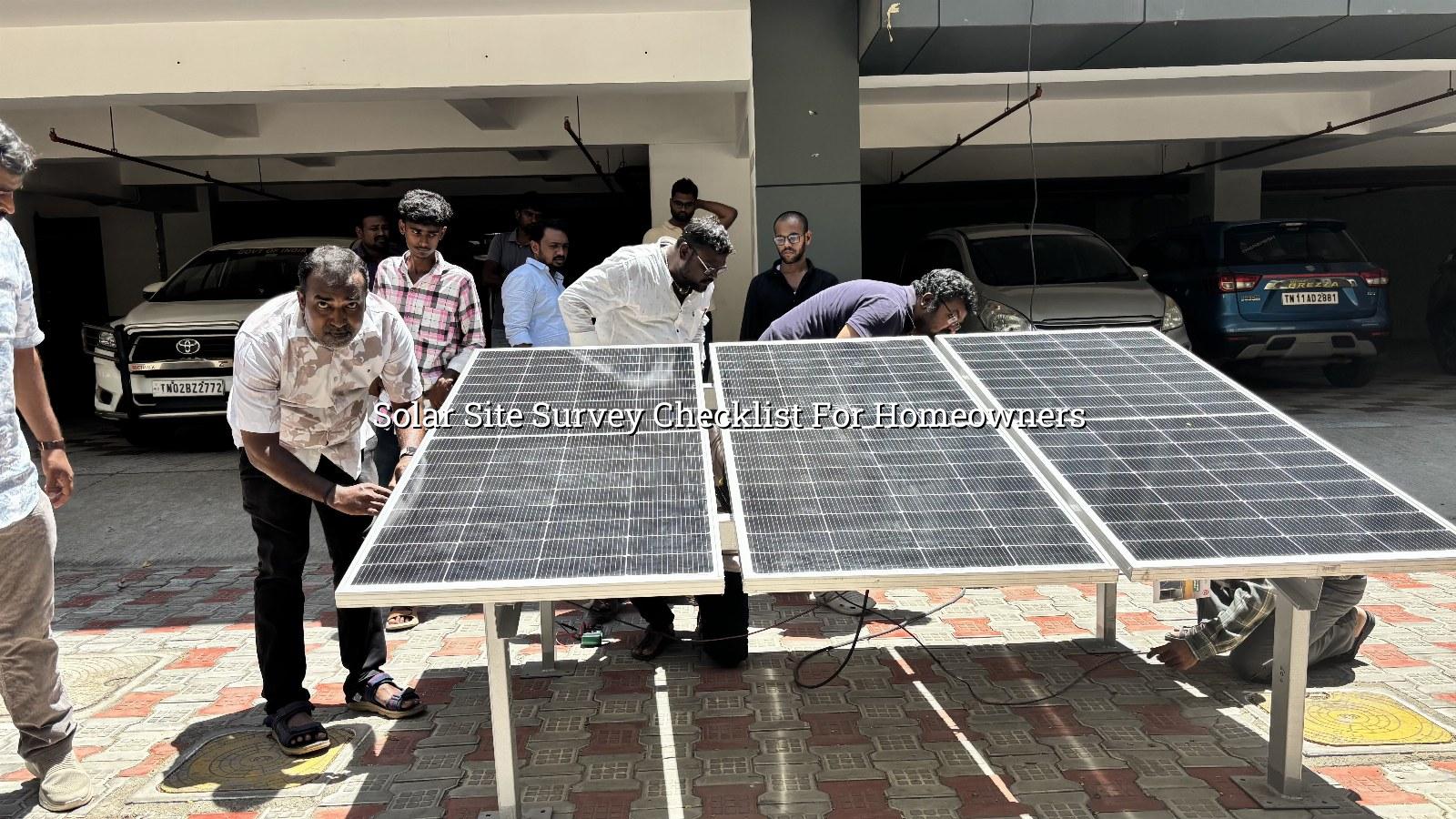
What gets checked
The roof, the EB bill and the small things that change the design
The survey is not a quick look from the gate. We check the structure, the available area, the shade pattern and the electrical path so the final plan makes sense for your house and not just for a brochure.
Roof type and usable space
RCC flat roofs are common in many homes around Kottar and Suchindram, while some houses still use sloped tiled roofs or sheet roofs that need a different fixing approach. Usable space matters more than roof size on paper because tanks, stair heads, parapet walls and access paths can eat into the layout very quickly.
We also look at where rainwater runs during the south-west and north-east monsoon periods. If water collects in one corner or a cable route passes through a weak point, that has to be addressed before installation begins. A clean layout that ignores drainage usually turns into a headache later.
Shade, direction and wind exposure
A roof facing the right direction can still be a poor fit if trees, nearby walls or water tanks block the sun for part of the day. A home in Ozhuginasery with an open terrace behaves differently from a house where an upper floor throws shade across the panels after lunch. That is why the direction of the roof and the actual shade hours matter so much.
In the windier parts of the district, fixing strength matters just as much as panel count. We pay attention to the mounting structure, the spacing and the way the roof will cope with movement over time. It’s the sort of detail that looks boring on paper and saves trouble on the roof.
- Start with the EB bill. We read your latest 60-day units, the connection details and the pattern of use before we talk about capacity.
- Measure the usable roof area. We check the clear terrace space, access points and where the panels can sit without blocking service routes.
- Study shade and orientation. Trees, walls, tanks and nearby buildings can change output hour by hour, so we map them against the roof.
- Inspect the structure and wiring path. Roof build, inverter point and cable route all affect how safe and tidy the final work will be.
- Match the system to the home. After that we recommend a suitable system type and size, instead of pushing the same setup everywhere.
Before the visit
A homeowner’s checklist to keep the survey useful
You do not need to do any technical work yourself. Just have the house ready so the visit can be clear and quick. The best surveys are the ones where the owner can show the bill, the roof access and any known problem spots without hunting around for them. We we can work faster that way, and we can give better advice too.
Keep these points ready
- Latest EB bill, so we can read the units and the connection details from the same bill cycle you actually pay for.
- Access to the roof, terrace or attic space if there is a cable route above or below the slab.
- Information about past leakage, waterproofing patches or cracked tiles, because that changes how the mounting is planned.
- Any place where shade falls in the morning or evening, especially from trees or a nearby upper floor.
- Clear note of where the inverter could be placed, since the equipment should sit in a dry, easy-to-reach spot.
- Permission to check the meter area and the path from the roof to the electrical point, so we can judge the work properly.
Why the checklist matters in real homes
No two houses in Nagercoil feel exactly the same once you get onto the terrace. Some have a wide open slab, some have water tanks crowding the corner, and some have old wiring that needs a closer look before anything is fixed. In places like Manavalakurichi or Colachel, salt-laden air can also affect exposed metal and joints, so the survey has to include those details instead of treating the roof like an isolated surface.
And if the roof is crowded with storage or patch repairs, that doesn’t automatically stop solar. It just means we need to understand the site better before any recommendation is made.
Design comes next
How the survey shapes the final solar layout
A proper site visit tells us what can be done safely and what should wait. It also keeps the final design from becoming awkward, oversized or annoying to maintain later.
System size is tied to the actual roof
A family in Kottar may have enough room for one layout, while another house in Parvathipuram may need a different arrangement because of stairs, tanks or shade from a neighboring building. We start with the roof and the EB bill together. That is the honest way to decide the capacity instead of trying to fit a fixed package into every house.
If the roof is small, shaded or partly blocked, that changes the recommendation. Sometimes the best answer is a different system type, and sometimes it is a cleaner arrangement on the same roof. The survey is what tells us which one makes sense.
Cable route and equipment placement matter more than people think
The path from the roof to the inverter and then to the EB connection needs to be checked before work starts. On older homes or sheet roofs, a careless route can leave you with awkward bends, unnecessary joints or places that are harder to service later. That is why we look at the real route, not the shortest one on a sketch.
In some houses the inverter should sit near the meter area, while in others a different dry wall works better. We decide that from the site, the weather exposure and the room you actually have, not from a guess.
| Survey point | What we look at | Why it matters |
|---|---|---|
| EB usage | Latest bill, 60-day units and connection details | Helps match the system to the home’s actual consumption |
| Roof space | Usable area, obstacles and access route | Shows how many panels can fit without crowding the roof |
| Shade | Trees, walls, tanks and nearby buildings | Reveals where output may drop during morning or evening hours |
| Structure | RCC, tiled or sheet roof and fixing method | Guides the mounting style and hardware choice |
| Electrical path | Inverter point, cable run and meter-side access | Helps keep the wiring tidy and easier to service later |
Useful checks
What to notice before we arrive at the house
If you want the survey to go smoothly, walk around the house once and look at it like a technician would. Where does the roof get shade after noon? Is the terrace crowded? Is there a dry place near the meter where equipment could sit without getting in the way? These are small questions, but they decide a lot.
A few simple things help a lot
- Take note of where sunlight is strongest during the day, especially on the roof sections you might want to use.
- Check whether nearby trees or boundary walls cast long shadows at the same time every day.
- See if the terrace drains freely after rain or if water hangs around in one corner.
- Look for cracked tiles, old waterproofing patches or sheet-roof rust that should be mentioned before installation planning.
- Make sure the meter area is accessible, because the route to the EB connection has to be planned carefully.
A home near Thovalai or Boothapandi may need extra attention to wind loading, especially if the roof is light or the fixing points are limited. On the coast, the same survey also pays close attention to salty air and exposed hardware. Those are not dramatic issues, just practical ones, and they are easier to handle before the system is installed than after.
If your roof already looks crowded or partly damaged, say so. Honest information at the start saves everyone time.
How we help
How JRS SunTech Energy Can Help
We keep the survey plain and practical. Our team visits the home, looks at the roof, checks the EB connection and tells you what the site can support in ordinary language. If the house is better suited to an on-grid, off-grid or hybrid setup, we say that after seeing the actual conditions. If the roof needs repair or cleaning first, we say that too.
We also guide customers through documentation and subsidy procedures where they apply, and we give one year of free service support after installation. For homes in Kottar, Nagercoil and nearby parts of Kanyakumari District, that local familiarity helps because roof styles, weather exposure and cable routes change from street to street.
Contact JRS SunTech Energy, Door No. 227, First Floor, Cape Road, St. Xavier's Church Junction, Kottar, Nagercoil, Kanyakumari District, Tamil Nadu - 629002. Phone: 9787775999, Email: jrssuntechenergy@gmail.com.
What to send first
If you already have your latest EB bill, send it with a few roof photos and a short note about shade or leakage history. That helps us plan the survey more neatly and arrive prepared. If you want to read a little more before you call, start with solar solutions, subsidy guidance or solar finance and EMI options.
Straight answers
Questions homeowners ask before the survey visit
Have your latest EB bill, a clear idea of your monthly usage and access to the roof or terrace. If you already know about past leakage, repairs or shade from nearby trees, tell us early. That saves time and helps us judge the site properly.
Not completely, but the survey works better when we can see the usable roof area clearly. A few stored items are normal in many homes, yet we need access to the ladder point, terrace edges and the spots where cabling may run.
We look at the roof type, the support below it and the way water drains after rain. RCC flat roofs, sloped tiled roofs and sheet roofs all behave differently, so the mounting method changes with the structure.
Shade does not always cancel a solar plan, but it changes the layout. We note the shaded hours, the direction of the roof and nearby obstructions, then decide whether the array can be moved or split for better output.
Yes, that is the point of it. We match your EB consumption, roof space, budget and site conditions before we suggest a capacity, instead of pushing one standard system for every house.
Yes. Our office is in Kottar, Nagercoil, and we regularly visit homes across nearby residential areas in Kanyakumari District. The visit is planned around the actual roof and EB connection, not around a fixed package.
Hurry up!Subsidy ends 31 March 2027 · 134 days left
Next step
Ready to check your roof the right way?
Send your latest EB bill and a few roof photos, and we will help you with a proper solar site survey for your home.
- Your electricity requirement and 60-day EB bill
- Property type — home, shop, office, farm or institution
- Backup requirement and available roof space
Related: Subsidy Guidance · Solar Finance & EMI · Contact
Free site survey · Kottar, Nagercoil